
04/11/2024

POEM: "Easter is Judgment Day"
I love poetry, but I often find it more difficult to understand than simple prose. It took me a long time to realize that poetry is supposed to call for an entirely different way of seeing and hearing. Poetry is like condensed soup. It’s not intended to be eaten out of the can, but rather it relies on us to add something to it—to stir in the water and air it needs so that after a period of mixing and heating it can convey its deeper truths.
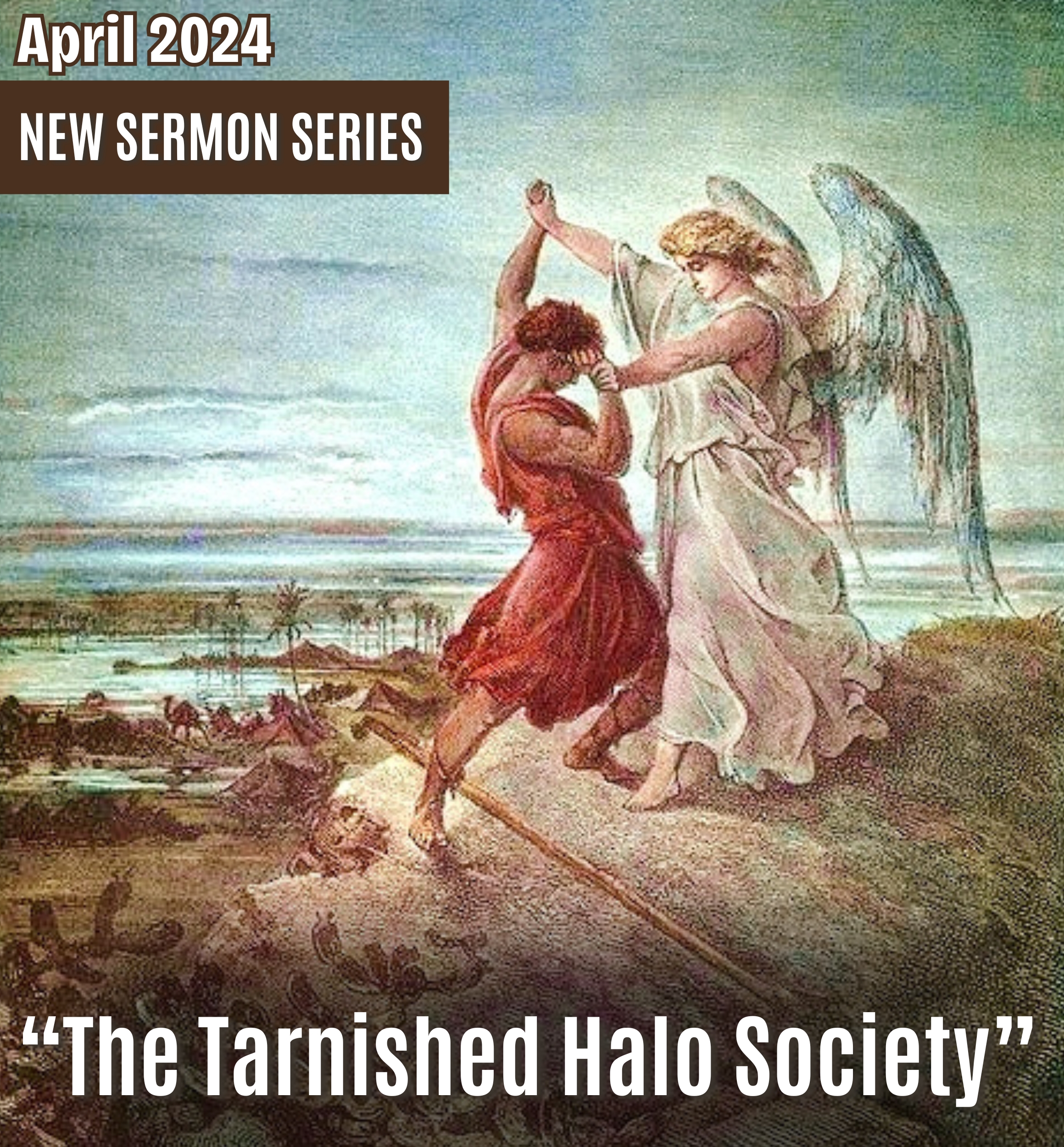
Sunday Pastor Jackie kicked off of our new sermons series: The Tarnished Halo Society—God Never Gives Up on Imperfect People. Her excellent message included a poem that jarred me enough that I asked for a printed copy. What got me interested was the phrase—“our sin revoked.” I’ve heard that our sins are forgiven, or removed, or canceled, but I’d never thought about the sin itself as being revoked, i.e. no longer charged against us. Easter is not often thought of as Judgment Day. We think of it as Our Greatest Blessing Day. And yet we forget that the resurrection of Jesus is a complete indictment of the ways of this fallen world. Easter delivers a sweeping judgment of the “the way things are" as well as the powers and principalities of this world.
I’ve included Steve Garnaas-Holmes’ poem because I think it is worth stirring, mixing, and warming up to. I believe it has the power to help us think about that first Easter in some new and challenging ways. Good Luck!
Easter is Judgment Day
Easter is Judgement Day.
The great work of all our empires of state are overturned;
our walls are broken down.
All our judgments are overruled.
All our cruelties rescinded.
Our sin revoked.
Our aloneness has been colonized by God's loving presence.
Even death has been dismembered, powerless.
Our fear is sentenced to life locked up in hope and trust and joy.
Our death is taken from us,
and replaced by Life that is unassailable and infinite.
With flaming sword of sunrise, God has vanquished the shadows.
and even the darkness shines, even the grave gives forth glory.
The Crucified One is risen.
Alleluia

Archived Posts
What Missed the Cut for last Sunday’s Sermon
The problem begins when another person's blessing becomes a source of dissatisfaction with your own life.
Almost Twenty Years Ago, a Young(?) Preacher Said…
Every once in a while, I go back through my old sermons to see if there is something I can ‘steal’ from myself. Who knows? I used to be a pretty good preacher, so why wouldn’t go back and take a look. I did find a sermon I preached back in 2008 on Luke 12—the Rich Fool Parable.
Sometimes A Quote Says It All
As I said Sunday, our new sermon series: Reversing Heart Disease, is based on a book by Pastor Andy Stanley. He’s a great communicator and his book, The Enemies of the Heart, has his inimitable conversational style. This morning I want to share with you a few of the quotes behind Sunday’s sermon. That way, you get a sense of the writer behind the preaching (more or less).
The Gifts of Those Who Need Our Hope
I barely touched on a topic that is of interest to me during Sunday’s sermon. When we think of Christian service we often think of reaching out to help make the burdens lighter for the least, the last, and the lost. I can’t think of a better way to express the commandment of Jesus to love our neighbor as ourselves. But what about...
Blessed People Bless People
But that Blessing Can Come with a Cost as Well
I’ve enclosed several insights I got while I dug into the scripture from Genesis 12 last Sunday. For you who love Bible background here’s a few thoughts to share:
Back and Forth with Chat GPT
Many of you know that I’ve found a new consultant to bounce my ideas off in regard to preaching. My good buddy Chat GPT and I sometimes disagree—often miscommunicate—but usually come up with some fruitful illustrations.
One More Thing About Becoming Wholly Human
I was talking Sunday about the work of Hare and Woods and their idea of ‘the survival of the friendliest.’ Essentially, they conclude that “our greatest evolutionary advantage wasn't that we could do everything ourselves. It was that we could do things together.”